
Everyone wants a higher Domain Authority. You check it monthly, compare it to competitors, and watch it inch upward with painful slowness, or worse, stay frozen at the same number for months.
The problem isn’t that you’re not trying. It’s that you’re starting in the wrong place. Most founders jump straight to guest posting or expensive PR campaigns without building the foundation first. Then they wonder why their DR barely moves despite spending weeks on outreach.
This guide breaks down the staged approach to improving your DR, where order matters as much as the tactics themselves.
What Is Domain Authority (and Domain Rating)?
Domain Authority (DA) and Domain Rating (DR) are essentially the same thing from different tools. DA comes from Moz, DR comes from Ahrefs. Both measure your site’s backlink strength on a scale from 0 to 100.
Your DR is calculated by two factors only:
- How many websites link to you
- How authoritative those websites are
That’s it. DR isn’t directly influenced by content quality, site age, or on-page SEO. It’s purely a backlink metric.
Why does it matter? Higher DR signals trust to search engines. Sites with stronger backlink profiles typically rank easier and faster than those without. If you’re struggling to crack page one for competitive keywords, your DR is often the limiting factor.
Not sure where your site stands right now? Check your Domain Rating for free using SEO Mode’s DR checker tool, no login needed.
The Staged Approach: Why Order Matters
You wouldn’t build a house starting with the roof. Yet most founders approach DR improvement exactly this way, they jump straight to advanced tactics without laying the groundwork.
The result? Wasted time, wasted money, and minimal movement in their DR score.
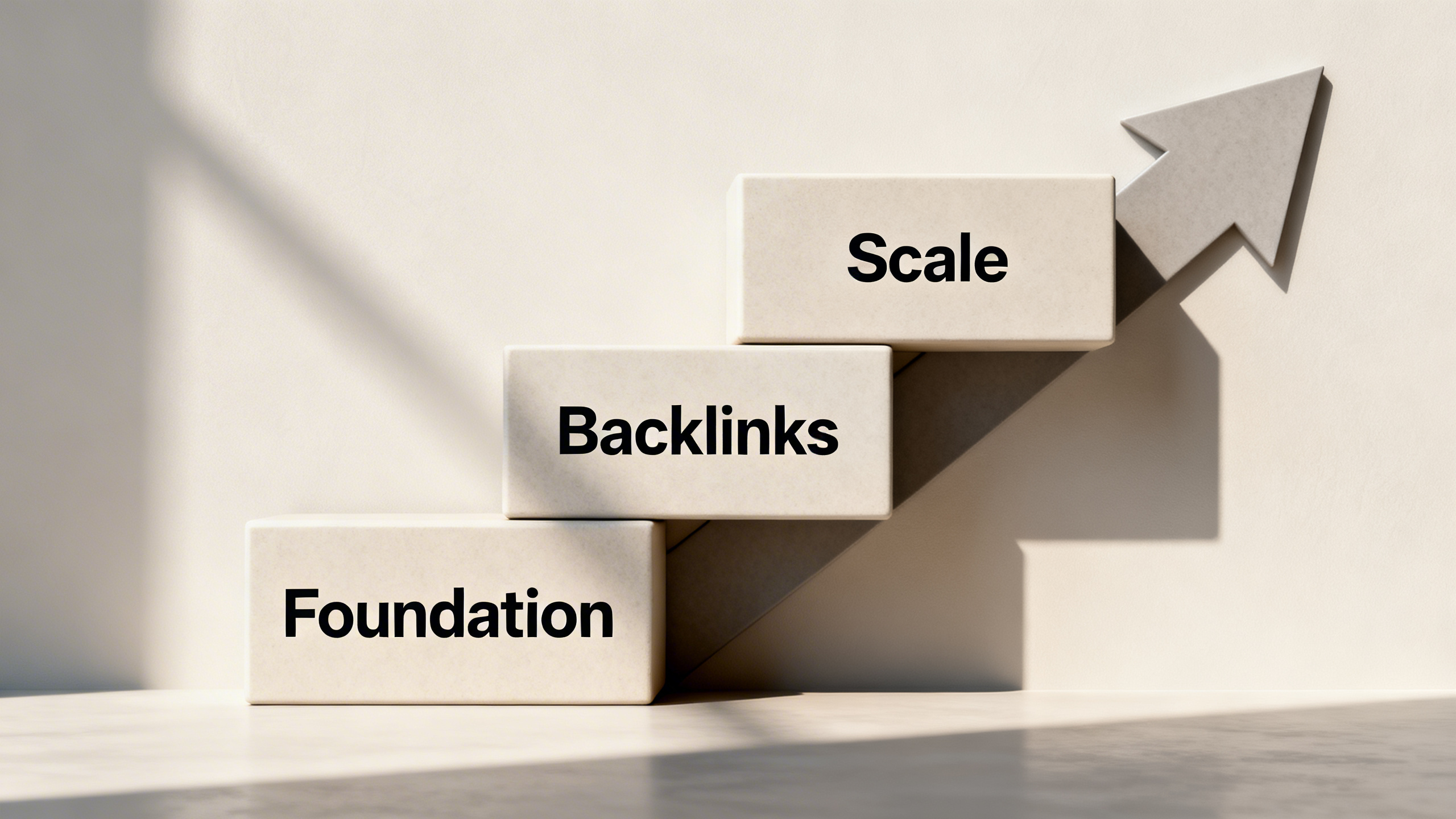
The effective approach follows three distinct stages:
- Build the foundation (citations and directory submissions)
- Build backlinks (broader link building tactics)
- Scale and maintain (ongoing strategy)
Each stage compounds on the one before it. Skip Stage 1, and Stage 2 becomes significantly harder and less effective. Master Stage 1, and everything that follows delivers better results.
Stage 1: Build the Foundation (The Most Skipped Step)
This is the most important section in this entire guide. If you take one action from this article, make it this stage.
Why This Step Comes First
Search engines need to confirm your business exists and is legitimate before rewarding you with rankings. Foundation links provide that confirmation signal at scale.
These are the easiest, most reliable backlinks you’ll ever build. They’re low-hanging fruit that most founders ignore because they seem too simple or unglamorous. That’s a costly mistake.
If You’re a Local Business: Local Citations
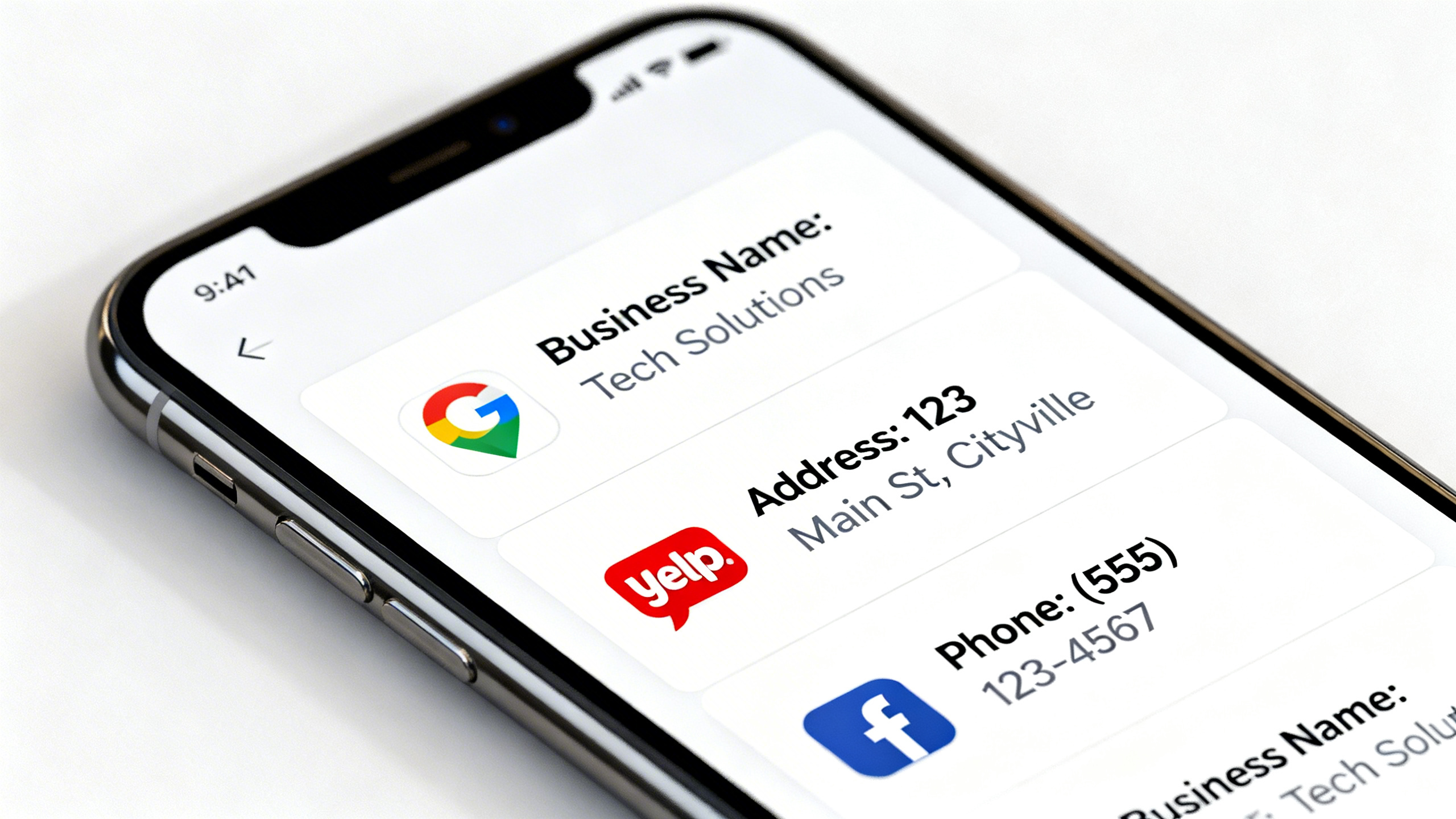
A citation is your business name, address, and phone number (NAP) listed consistently across the web. Simple concept, massive impact.
Where to build them:
- Google Business Profile
- Yelp
- Apple Maps
- Bing Places
- Yellow Pages
- Industry-specific directories (legal directories for law firms, health directories for medical practices, etc.)
Consistency matters critically here. If your address is “123 Main St” on Google but “123 Main Street” on Yelp, search engines get confused. Inconsistent NAP data dilutes trust signals and can actively hurt your local rankings.
These citations individually carry low DR scores. But collectively, they signal legitimacy to Google. A business listed consistently across 50+ directories looks established and trustworthy. One with scattered, inconsistent information looks questionable.
If You’re a SaaS or Ecommerce Business: Directory Submissions
Directory submissions serve the same foundational purpose for non-local businesses. Target directories where your audience actually looks for solutions.
Check our blog post about Best Directories for SaaS Products.
According to recent data from Ahrefs, getting listed on high-DR directories early can provide a meaningful initial boost to new sites, often moving DR from single digits into the 20-30 range faster than any other tactic.
Why these work: You’re earning backlinks from high-DR sites (many in the DR 70-90 range) that search engines already trust. That authority signal transfers to your domain.
Bonus benefit: You also get real traffic and potential customers, not just SEO value. A well-optimized G2 listing generates demo requests, not just backlinks.
SEO Mode submits your startup to 100+ directories, done for you, fast, with consistent NAP data across every listing.
The Non-Negotiable Rule
Don’t move to Stage 2 until your foundation is solid. For local businesses, that means 30+ consistent citations. For SaaS and ecommerce, that means listings on the major directories plus 10-20 niche-specific ones.
This step is cheap, fast, and has compounding returns. Most founders skip it and regret it six months later when they’ve spent thousands on link building with minimal DR movement.
Stage 2: Build Backlinks (The Main Course)
After your foundation is in place, you expand to broader link building tactics. This is where most guides start, and where you should start only after completing Stage 1.
Not all backlinks are equal. One link from a DR 80 site in your niche outweighs fifty links from DR 10 spam blogs. Focus on quality and relevance over quantity.
Guest Posting
Write articles for relevant blogs and publications in your niche. You provide valuable content, they provide a backlink to your site (usually in the author bio or contextually within the article).
Best for: SaaS, agencies, content-driven businesses
What to look for when selecting opportunities:
- DR 40+ minimum
- Topically relevant to your industry
- Real traffic (check in Ahrefs or SEMrush, avoid sites with high DR but zero traffic)
- Editorial standards (avoid sites that publish anything without review)
Start with second-tier publications in your space. They’re easier to break into than the top-tier sites, and you can use those published pieces as credentials when pitching higher-authority publications later.
Digital PR, HARO, and Journalist Outreach
Get quoted or featured in press articles. Media sites carry massive DR (think DR 85-95), so even a single mention can noticeably move your score.
Best for: Any business, this tactic works across industries
How to execute:
- Sign up for HARO (Help a Reporter Out) and respond to relevant journalist queries
- Use Qwoted for additional journalist opportunities
- Pitch journalists directly who cover your industry
- Create newsworthy content (original research, surveys, trend reports) that journalists want to cite
According to data from Moz, digital PR campaigns can earn backlinks with an average DR of 75+, significantly higher than most other link building tactics.
The challenge: Response rates are low, and you need to move fast. Journalists often have same-day deadlines. Set up email alerts and respond within hours, not days.
Resource Page Link Building
Find pages that curate helpful tools and resources in your niche. These “best tools for X” or “resources for Y” pages naturally link out to relevant sites.
How to find opportunities: Search Google for terms like “your industry + resources,” “your industry + tools,” or “your keyword + helpful links.”
Once you find relevant resource pages, pitch your site as an addition. Keep it brief: explain what your tool/content does, why it’s valuable for their audience, and how it fits their existing list.
High conversion rate, highly relevant links. Resource pages exist specifically to link out, so acceptance rates run much higher than cold outreach for other link types.
Broken Link Building
Find broken links on relevant sites and offer your content as a replacement. You’re solving a problem for the site owner (they have a broken link hurting user experience) while earning a contextual, editorial link.
Process:
- Find relevant sites in your niche with resource pages or content hubs
- Use tools like Ahrefs or Check My Links (Chrome extension) to identify broken outbound links
- Create content that matches what the broken link used to point to (or use existing content if it fits)
- Reach out to the site owner, alert them to the broken link, and suggest your content as a replacement
Takes more effort than other tactics, but earns genuinely editorial links that carry strong authority signals.
Partnership and Supplier Links
Reach out to partners, vendors, or platforms you integrate with for a mention or link. Often overlooked, highly legitimate.
Examples:
- If you integrate with Stripe, pitch them to add you to their partner directory
- If you use specific software vendors, ask if they feature customers/partners
- If you sponsor events or organizations, ensure you get a backlink from their site
- If you supply products to retailers, request links from their supplier pages
These relationships already exist. You’re simply activating the SEO value from them.
Content-Led Link Acquisition (Link Bait)
Create assets that naturally earn links because they provide unique value other content creators want to reference.
Examples:
- Original research and data studies in your industry
- Free tools or calculators
- Comprehensive guides or frameworks
- Industry surveys or trend reports
Higher effort, highest long-term return. A single well-executed research piece can earn hundreds of backlinks over time as other writers cite your data.
The key: Create something genuinely new. Repackaging existing information won’t earn links. Publishing original data, tools, or frameworks will.
Stage 3: Scale and Maintain
DR improvement isn’t a one-time project. It’s an ongoing process that compounds over time.
Monitor your DR monthly. Track which tactics move the needle most for your specific site. Use SEO Mode’s free DR checker to track your progress without needing multiple tool subscriptions.
Watch your backlink profile for toxic or spammy links. If you notice low-quality links appearing (from link farms, PBNs, or obvious spam sites), use Google’s Disavow Tool to tell search engines to ignore them. Quality matters more than quantity.
Keep feeding the top of the funnel. Add new directory listings as you discover them. Publish new guest posts quarterly. Create new link-worthy content annually. Consistency beats intensity.
One important expectation to set: DR gains are slow at first, then compound. You might not see movement for weeks after your first few backlinks. Then suddenly you jump from DR 12 to DR 18. Then growth steadies. This is normal. The algorithm recalculates based on cumulative signals, not individual links.
How Long Does It Take to Improve Domain Rating?

Set realistic expectations based on your starting point and link building velocity.
| Starting DR | Target DR | Typical Timeline | Required Links |
|---|---|---|---|
| 0-10 | 20-30 | 1-2 months | 20-40 quality links |
| 20-30 | 40-50 | 2-6 months | 50-100 quality links |
| 40-50 | 60+ | 7-12+ months | 100-300+ quality links |
The foundation stage (Stage 1) typically shows results fastest. Directory submissions and citations are quick to build and quick to get indexed. Most businesses see their first DR movement within 30-60 days of completing their directory and citation buildout.
Stage 2 tactics take longer. Guest posts need to be written, pitched, published, and then crawled. Digital PR hits can be unpredictable, you might land nothing for months, then get featured in a major publication that jumps your DR by 5 points overnight.
The key insight: DR above 50 is a long game requiring sustained effort. DR from 0 to 30 is achievable for any business willing to systematically work through Stages 1 and 2.
Start With the Foundation, Not the Fancy Tactics
The staged approach isn’t complicated: build your foundation first, expand to broader link building second, then scale and maintain third.
The mistake to avoid: Skipping Stage 1 entirely and jumping straight to outreach. Citations and directory submissions aren’t glamorous. They don’t make for exciting case studies. But they’re the fastest, most reliable way to establish baseline authority that makes everything else more effective.
Check your DR right now with SEO Mode’s free tool to see where you stand. Then let SEO Mode handle your directory submissions and give your DR the foundation it needs to grow consistently over time.